Bonnie and Clyde and the "dulcimore"
General mountain dulcimer or music discussions


John Henry said:
(and would'nt you just know JK would be in frame somewhere's ???)
John Henry said:
(and would'nt you just know JK would be in frame somewhere's ???)
Hey, I missed that Dusty! Things that make you go hmmmm! 
Dusty Turtle said:
How aboutthe musicologist Professor Herbert Nositall?
Scott Collier said:Well i don't know but with a "music professor" named Will E. Playmore? Still makes me wonder, lol. It may or may not be a true story but it's thought provoking non the less!
How aboutthe musicologist Professor Herbert Nositall?
Scott Collier said:
Well i don't know but with a "music professor" named Will E. Playmore? Still makes me wonder, lol. It may or may not be a true story but it's thought provoking non the less!
I'm surprised that y'all aren't familiar with this bit of history. It is well known is these parts, maybe because Bony's favorite delcimore was made by a famous Knott county builder, Clyde's paternal uncle Wheel.
Ifear we may find out that Grandma Adams (Spencer) taught Bonnie how to use a machine gun, too.
Randy Adams said:
This is actually a true story and has been told in our family for years. My Grandma Adams, maiden name Spencer, grew up in Texas, played the dulcimer, and knew the Parker family. She showed Bonnie how to play the basics on the dulcimer, the modes and tunings and so forth, and she said she had never seen anyone with such a natural aptitude for music like Bonnie Parker. My Aunt Jackye Sue has pictures of Grandma and Bonnie with their dulcimers and a couple of crude home recordings of them playing. I will try to get them and will post them here.
Folks, for the record, I am skeptical too, for I've been unable to corroborate most of the information in Gibson's article. I do know Ralph Peer was indeed a recording engineer and producer who pioneered the makingof field recordings, but I can't seem to find references anywhere else to a most of this intriguing story.
In this case, perhaps, hearing is believing.
Well, just goes to show that any assumption that this little 'ole island I live on has some sort of monopoly on interesting historical snippets, just ain't correct ! Nice one Randy, would be good to hear them, and interesting to know who made the instrument ?
JohnH
(and would'nt you just know JK would be in frame somewhere's ???)
Yeah... I want to see primary source information... the recordings labels and how they were ID'd, a photo of Bony with a dulcemore rather than a revolver, an official list of items found after the final shootout... something substantive.
I have to agree with John. Sounds a little suspect. First, I'd like to find out how the recordings were identified as to the performers. But with a story like this, you just want to believe that it's true. More research is needed.
That is a fascinating read. I hope that it's all true, but it does have a little "April 1st" feel to it lol. Bonnie & Clyde had their criminal careers ended 35-40 minutes from my house, and the small town of Arcadia houses a Bonnie & Clyde Museum very near the ambush site. Karen and I should drive over there one day this summer and see what we can find out (if anything). This is pretty cool stuff!
Very interesting article! Thx for the link. I would also love to hear the recordings.
I am surprised no one here has noticed this yet, but Ohio luthier Ron Gibson has published an article on his website about three recently discovered recordings by the famed bank robbers Bonnie and Clyde in which Bony Parker played a ducimore musical instrument. The two were killed in 1934, so it is likely the recordings--if genuine--date from a year or two before then.
What is even more striking than the mere fact that Bonnie played a dulcimer is the fashion in which she did so. In one song she combined counterpoint melodies withjazz chord inversionsas well as playing percussion by tapping on the soundbox. In another song she played guitar-like riffs that would be associated with Chuck Berry two decades later. Another song includes "raps and rhymes" and can only be described as original gangster rap.
You can find Ron Gibson's article here: Did Bonnie and Clyde Play the Dulcimer? .
These recordings were supposedly discovered by the Library of Congress, which might mean they either are or soon will be made available to the public. I am sure many of us will be eager listeners and won't really believe the descriptions of the music until we hear for ourselves.
Welcome to FOTMD Mike! Good advice so far. If the old finish is lacquer, you can clean it with lacquer thinner and then just re-spray with satin lacquer. You can buy spray lacquer in cans at most hardware stores or home centers. Lacquer can be sprayed over shellac. I usually use a thin coat of shellac before spraying the lacquer on my instruments. Your first job as has already been noted is to identify the finish that is on your dulcimer. Best wishes for a successful completion of your project.
Ken
Welcome Mike! This is certainly the place for building type questions.
What brand or who made the instrument? Contact the builder and ask what finish is already there. Ron uses a satin lacquer finish, easy enough to buy and apply.
I can never remember whether it's lacquer you can apply over shellac or the other way around. And as Dan said, if there is any kind of oil finish you can add either the same or a different oil finish right on top. Otherwise you'll need to strip and/or sand off the existing finish and re-apply.
If your strings are too high above the frets this can make it harder to fret cleanly. Stick dulcimers should conform to the same set up parameters as lap dulcimers, guitars etc. If the strings are too high, you have to press harder to get clean notes on any stringed instrument, except those played with a slide or bar, such as steel guitars. Do you have a friend who plays any stringed instrument? Perhaps they could look at the action and see that it is set up correctly. If not, a good rule of thumb for diatonic instruments is the string should be no higher above the first fret than the thickness of a dime placed on the fret board behind the 1st fret, and the thickness of a nickle placed on the seventh fret. If the strings are significantly higher, the height needs to be adjusted.
Another possibility is that another finger is leaning over and damping the string, making it thud. Make sure the end of your finger is pressing the string, not the side of your finger. This is less likely on lap dulcimers because the hand is not around the neck of the instrument. It's more common on neck type instruments. Don't let the neck of your strum stick fall into the V between your thumb and index finger. The pad of your thumb should be placed behind the neck, allowing you to oppose the downward pressure of the fingers with upward thumb pressure. An observer facing you should not be able to see any part of the last joint of your thumb. This is a pretty common problem, work hard to ensure you don't have this problem. Unlearning a bad habit is REALLY HARD! I still catch myself doing this after all these years playing guitar, etc.
If you had a high fret, a buzz or rattle would be more likely to happen, rather than a thud. The rattle would occur at one or more frets below the high fret. A thud indicates the string is probably not touching the fret at all.
Paul
Hi Rich. This is probably going to sound like a dumb question, but are you wearing a long sleeve shirt when playing. Here's the reason I ask. I've at times had a problem with a dull sounding note and found that it isn't in the fretting, but that the sleeve on my right side was catching the strings as I'd strum, very briefly damping them. Sometimes it would be all the notes or at others just one.
Hi Rich,
Perhaps my dulcimer-blog lesson on fretting finger tips would be helpful to you:
http://dulcimer-noter-drone.blogspot.com/2012/07/lazy-fingers.html
Rob said it right - just behind, without touching the fret.
Jessica - are you having this problem on a Stick? Or on a Dulcimer like the one in your avatar photo? If it's on a dulcimer, you may not have a wide enough stance with your legs, and the dulcimer is sagging a tiny bit as you push down at the first fret. When you're sitting you want a wide knee position, with your left knee under the first fret. Not knees together with the dulcimer teeter-totter-ing atop them.
Rich -- Since it's a "sometimes" thing, chances are your problem is "pilot error" rather than anything wrong with the instrument. Probably related to the way your left hand has to twist to get to that first fret on the melody string. Stick necks are much narrower than guitar/mando/uke necks and that requires your hand to bend differently. You could test this by laying the stick flat on a table and fretting while you can see what you're doing.
johnp is right too. The stick instrument, or as I call them American Citterns, isn't a dulcimer. By definition a dulcimer has no neck beyond the body. The folks here who play sticks may not look in General dulcimer discussions. If it's specific to sticks, you might want to post a question to the Stick Group.
Thanks for the tips Geoff. You are right it is the base string. I don't remember what I put on it but I'll check your tips out tonight.
Many thanks
David
Geoff Black said:
Hi David
No-one should suffer slipping pegs, particularly on a Glenn where they are normally well fitted and effective.
A few tips with apologies if they are self-evident.
- I imagine this is the bass string. If so check your gauge first. It needs to be no more than 0.024w, but this should hold easily at D.
- Always wind the strings on carefully. Strings naturally try to pull the pegs out, unless they are the middle string which pulls straight. Ensure the last two coils are tight against their respective sides of the headstock, so that the pull is as straight as possible.
- You can put too much dope on. Peg treatments try to do two opposite things - make the peg turn smoothly and ensure it holds firm. Too much or too little drives it to do one or the other exclusively! Either take some dope off using very fine steel wool or simply dust lightly with some chalk to help grip - yes, I know it sounds crude but it works!
Best of luck with it. Should be fine and, with the Glenn sound, should give great enjoyment.
Geoff
Hi David
No-one should suffer slipping pegs, particularly on a Glenn where they are normally well fitted and effective.
A few tips with apologies if they are self-evident.
Best of luck with it. Should be fine and, with the Glenn sound, should give great enjoyment.
Geoff
Geoff, the only problem I have is tuning it. Two of the pegs are not too bad but one of them when you get it tuned and bump it or touch it it jumps back again. I've used peg drops like Strumlelia recommended and it helps except for that one peg. I've tuned it down to CGG as DAA was too hard to tune and keep tuned. I use it when I want to play songs in DAA
Geoff Black said:
Hi David
Only just spotted this on an internet search, although I'm on FOTMD often. You may now have answers to your questions, if not the following may help.
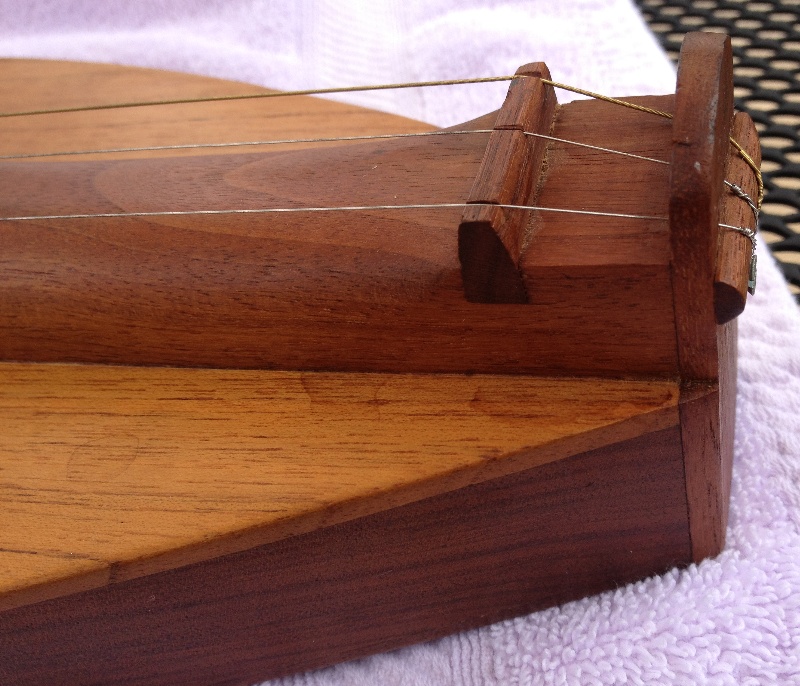
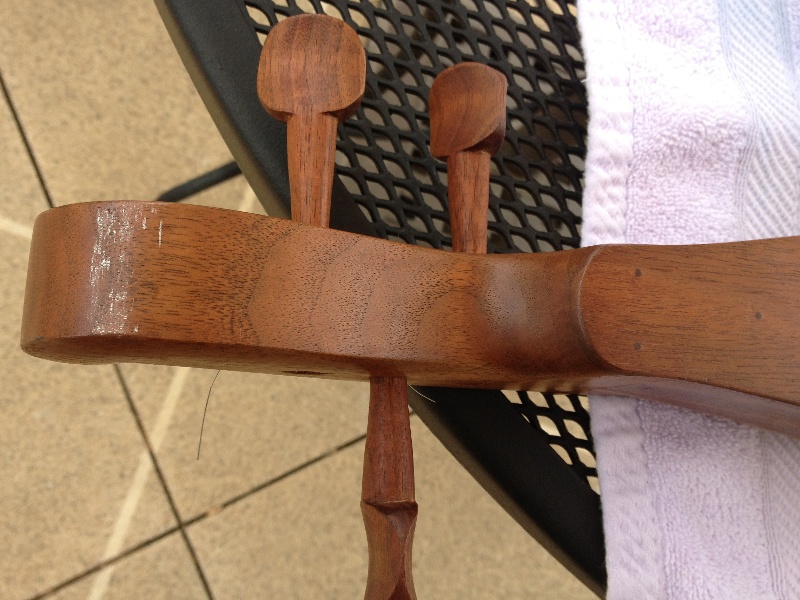
Lovely instrument from a middle phase of the Glenn's dulcimer making. It has no flare on the headstock for the strings to run outwards over the nut; shallow sides (1 3/8" or so); and a single nickel screw to act as the string anchor - yes it's original!. Earlier ones had a thinner tailpiece through which the strings pass at the bridge end. Later ones are deeper with flared headstock and brass screw. I have a 1974 which is very similar to this - and a few other earlier and later models.
Strings MAY be original - difficult to say. I've had 0.010, 0.010, 0.018w and 0.011, 0.011, 0.021w on mine when I got them - they seem a little lighter than my expectation. I would normally use 0.012 and 0.022w or even 0.024w for DAA with this scale length. What size were yours (if you can remember)?
Woods: you're right with sides and back, but I can't identify the top either. In fact, I struggle with many of the six I own. Most are hardwood, as this appears to be (one cedar), but all different and none obvious!
Are you playing it? If so, what kind of music? Any issues with it to date? - looks very original and in excellent condition. Feel free to ask any questions. Anyway, congratulations on a good purchase. Hope you enjoy.
Geoff Black
Revels Music
That is a real beauty! Looks all original and mint condition to me- I wouldn't change a thing except to put fresh strings. But also worth writing down the gauge of the strings on it first, or save them in a little labeled bag...as they look like they might well be the original strings put on by Mr. Glenn. It's a lovely gem and so nice that it hasn't been tampered with, after all these years. 
Hi David
Only just spotted this on an internet search, although I'm on FOTMD often. You may now have answers to your questions, if not the following may help.
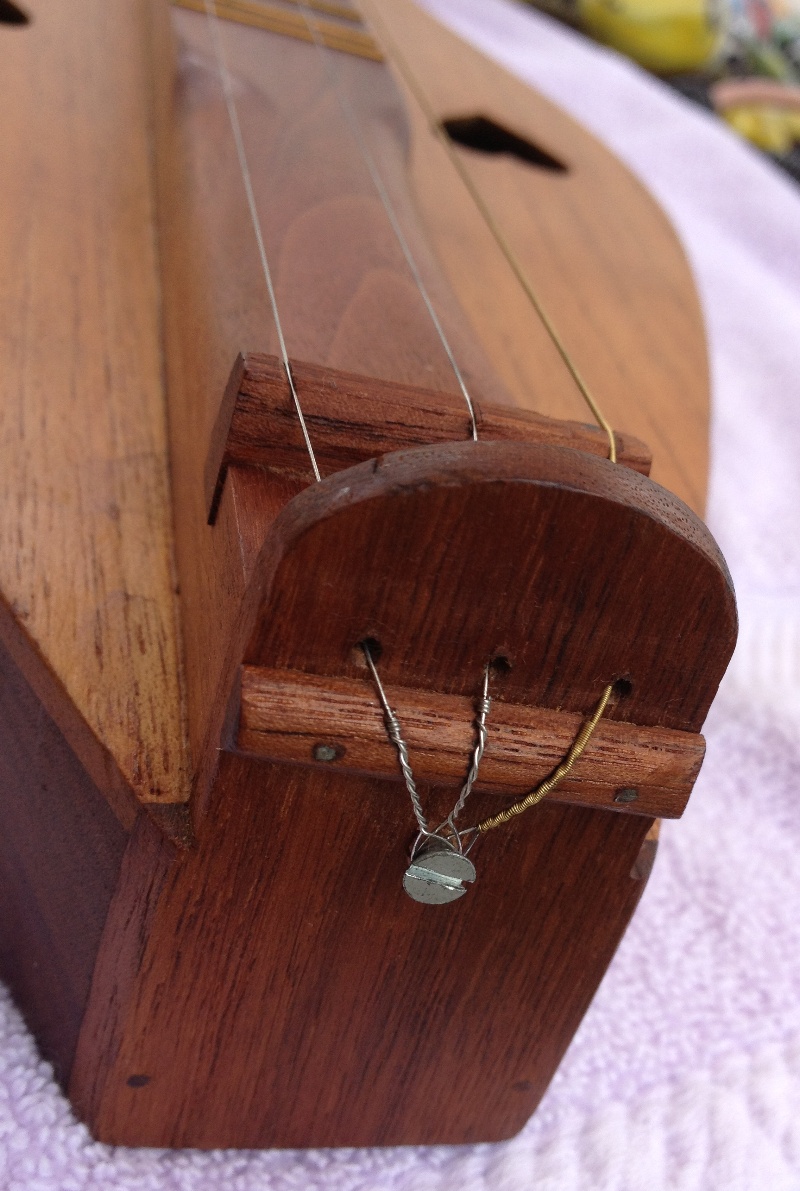
Lovely instrument from a middle phase of the Glenn's dulcimer making. It has no flare on the headstock for the strings to run outwards over the nut; shallow sides (1 3/8" or so); and a single nickel screw to act as the string anchor - yes it's original!. Earlier ones had a thinner tailpiece through which the strings pass at the bridge end. Later ones are deeper with flared headstock and brass screw. I have a 1974 which is very similar to this - and a few other earlier and later models.
Strings MAY be original - difficult to say. I've had 0.010, 0.010, 0.018w and 0.011, 0.011, 0.021w on mine when I got them - they seem a little lighter than my expectation. I would normally use 0.012 and 0.022w or even 0.024w for DAA with this scale length. What size were yours (if you can remember)?
Woods: you're right with sides and back, but I can't identify the top either. In fact, I struggle with many of the six I own. Most are hardwood, as this appears to be (one cedar), but all different and none obvious!
Are you playing it? If so, what kind of music? Any issues with it to date? - looks very original and in excellent condition. Feel free to ask any questions. Anyway, congratulations on a good purchase. Hope you enjoy.
Geoff Black
Revels Music
Pretty! Next must come the sound file so we all can drool over its sound as well as its beauty.
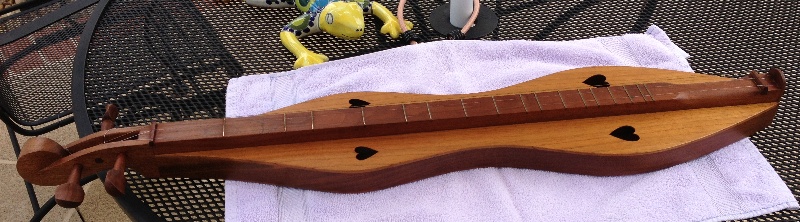
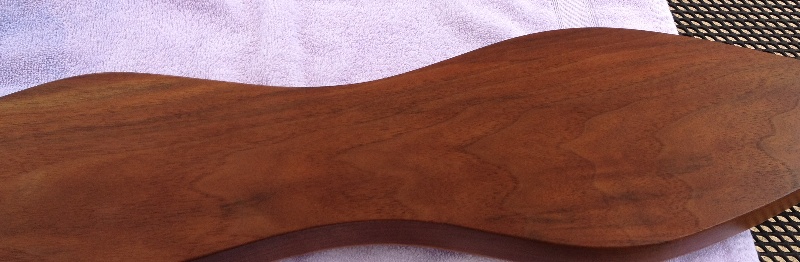
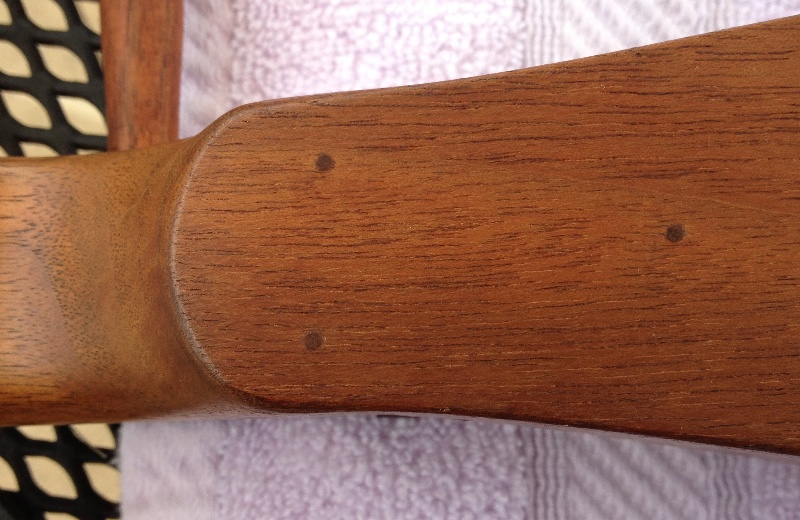
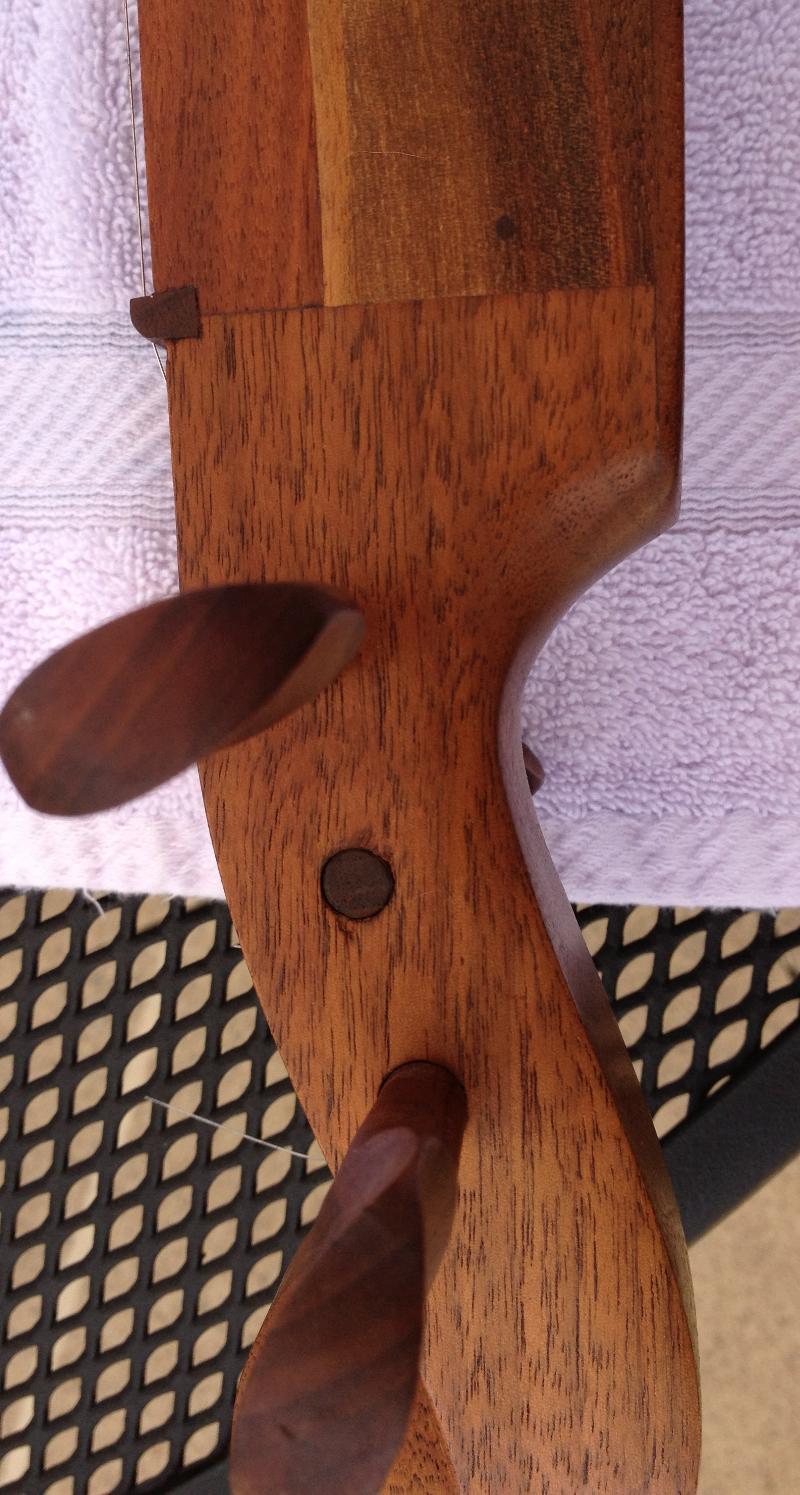
Yesterday I bought a Clifford Glenn dulcimer from a friend who picked it up at a local local auction. It has a little wear and I believe some water spots that I have not tried too hard yet to run out (if possible). The strings are corroded and who knows may be original(?).
One thing I don't if it's original is the screw on the tail when the three strings loop on. Anyone know?
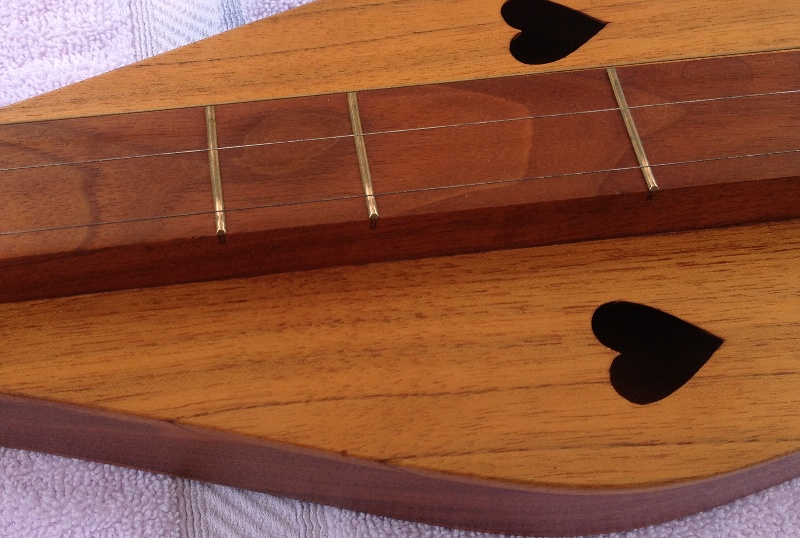
Also trying to figure out what the wood is. The sides and bottom look like walnut to me and I have no idea about the top.


It's interesting Paul, how flexible the dulcimer can be for a non-chromatic instrument. I listened to that particular clip you found and I think it's in the same key all the way through - but I'd have to listen again to be sure. This arrangement I've been given to work from is a duet - soprano & alto parts. The key change is part of this particular arrangment - I've found a lot of hymns sung by the 2 church choirs I sing in have key changes - I used to think it was how the hymn was originally written, but perhaps it's a case of how this particular version of XYZ hymn has been arranged.
In any case, I only have to play chords for this one. The cellist is there to provide a tenor/bass harmony and so some kind of rhythmic accompaniment is needed, which is the chords on the dulcimer. You know I didn't think of looking at the chord fingerings and how they'd sound on a tuning that's EbBbEb. I will give it a try and compare it with the 1-3-5 tunings. That's a good suggestion thank you. I experimented tuning it all Eb or Bb and every chord was a barre chord! LOL. Barre chords are hard on my fingers, whereas other chord fingering positions are not - go figure.
I'm not familiar with the song, so I searched it and found several versions. I listened to this one: It sounds to be an ionian melody.
This one changes keys, most likely to allow the melody to change from soprano to tenor voices. If you were to sing this as a soloist, you could keep it in the vocal range best suited to your voice, eliminating the key change entirely. As an instrumental, the key change can add some variety, but isn't completely necessary. This is part of the "re thinking" I mentioned in my earlier post.
Still another possibility for this example is to tune to EbBbEb, and play the Eb section on the melody string, and the Bb section on the middle string. This likely would require the use of a 6+ fret, if you have one. Without the 6+ fret, you could tune to EbBbBb, and try playing the Eb section on the melody string, and the Bb section on the bass string.
These 2 keys have a lot of common notes and chords, which allows one tuning to overlap the keys fairly well. Many of us do this with the keys of D,G, and A when we use the DAD tuning. Some melody notes are found on the middle string, and some may require the 6+ fret, but the closeness of the scales does give us a lot of overlap. Sometimes when only one missing note impedes us, we bend the lower note to get it. We seldom need to bend the string more than a half step, though a whole step and more is possible. unless you like extra heavy gauge strings.
If the song requires 3 or more different keys, or If you play a lot of songs with key changes, you may find a 135 tuning, or a chromatic dulcimer will do the job best.
Paul
Ruth, I have to ask a question to ensure you are asking the right question.
Are you sure you are talking about "key" changes and not merely "chord" changes? The key corresponds to the keynote of the song, and in any given key, certain chords are likely. For example, a song that is in Eb will almost always have Ab and Bb as well. When a song moves from an Eb chord to a Bb chord, that is usually not a key change; it is merely a chord change. Any song will have a set of chord changes that is referred to as the chord progression, and in any given tuning, certain chord progressions are possible.
If you were to play "Go Tell Aunt Rhody," for example, in the key of Eb, there would be two chords: Eb and Bb. If you were to play "Bile Dem Cabbage Down" in the key of Eb, there would be three chords: Eb, Ab, and Bb. But in neither case is there a key change. Both songs are played in one key.
Sometimes songs really do change keys. In those cases the entire song moves from one keynote to another. And the most common key change is to move up a 4th to create an increased emotionality. For example, the Beatles song "Penny Lane" famously moves up a fourth towards the end. And sometimes that same shift can represent a lack of originality, as in the Stevie Wonder song "I Just Called to Say I Love You," where to avoid the appearance of excessive repetition the song moves up a fourth. When Whitney Houston moves up a fourth in "I Will Always Love You" it creates not only increased emotion, but increased awe because her voice demonstrates such range.
So there are songs that change keys, but they are rare. Most of the time a song begins and ends in a given key. And in that key, it will change chords several times. But if you are playing a song that moves between Eb and Bb, it is probably not changing keys, but merely changing chords.
If I am wrong here and you are indeed referring to key changes, please forgive my ramblings.
Thanks for this info - I hadn't heard of this site before. I've ended up selecting a hymn that only has 2 key changes - Eb maj to Bb maj. I'm hoping that playing around with the tunings will make it doable.
Yes, and not necessarily. It's impossible in those keys using the common 155/158 tunings, but may be possible if you rethink it.
One answer you might want to try is the 135 tuning. Have a look here, http://mountaindulcimer-1-3-5.com/ and try a song or two from their tabs. This tuning gives you the flexibility to deal with key changes.Probably what I would try first, if I didn't play other chromatic instruments.
Another possibility is to change keys to put all parts of a medley in the same key. One tuning will cover them all, unless the songs use accidentals, in which case you may still be looking for an answer.
I would try the 135 tuning first, and see where it takes you.
Paul
Hi, I was asked recently to look through a selection of hymn duets and find something that I could play dulcimer to (chords probably). But last night when I sat down to look at them I realised all these hymns are either medleys or have multiple key changes. Eg, D major to E flat major to F major. It's impossible on a dulcimer isn't it?
The plywood dulcimers were made as a group effort.
Mark Richardson said:
Looks nice.. I have something similar and still trying to find out its maker... It came with Capritarus paper work... a actual manual and diagram and how to tune, from Capritarus.... NO label inside. I figured it around 73 or earlier...Neil Hellman took a look and couldn't tell its maker, as its not of the Model D ( I have an 83 Walnut Model D, and owned several Model D's in the early 70's).